
Robin's Short Version
- Nutrition, movement, sleep, mental health and reducing toxins are the foundation of a longevity protocol—and each is associated with meaningful gains in lifespan or lower mortality risk.
- Optimization tools like hormones, supplements, tracking and sauna can add value when they fit your goals, labs and budget, but they cannot replace the foundations.
- Cutting-edge experiments such as peptides, plasmapheresis and hyperbaric oxygen have higher costs, greater risks and, so far, no human data showing that they extend lifespan or healthspan.
- Start by auditing your weakest foundation, then track whether any new intervention is producing a measurable change.
- Know your numbers through longevity-focused labs and DEXA scans so you can identify risk early and decide what to optimize next.
Every foundation pillar is worth years of life. The decoration, so far? Zero.
I've been giving a lot of talks on longevity this fall. It's everybody's favorite topic. And my favorite talk to give is how to build your ultimate longevity protocol. I'm giving it live this Saturday morning at Eudēmonia in West Palm Beach.
In the talk, I lay out my layer cake framework. The foundation layer is the cake. The optimization layer is the icing. The experimentation layer is the decoration.
The most important thing to know: if you don't have the cake, you can't put on icing or decoration. The foundation is the part I see the most people skip.
There's a lot of marketing to us in the longevity space. Even I get FOMO and overwhelm. What should I be doing? What should I be adding on, when I'm already doing so much? So I remind myself of what the data shows. The foundations are where we get the most bang for our buck. Not just for living longer, but for healthspan: living longer, healthier.
And at the end of the day, I remind myself why I'm doing all of this. I'm not doing it to get a gold star when I turn 120. I'm doing it because I want to live healthier and better today and tomorrow. I want to live my full story. I want to live my greatest life with my family. I want to have adventures. I want to have an impact on the world.
Life is precious and sometimes short. If we're lucky, it's long enough to give us some of the fruits of our longevity. The best protocols don't just help you live longer and healthier down the road. They help you live better now.
So don't lose sight of that. Make sure you're doing the foundations before you worry about the optimizations: supplements, sauna, cold plunge, bone tech. And do all of that before you focus on experimentation: peptides, hyperbaric oxygen and the like.
This week: the layer cake, how many years each foundation pillar is worth, and how to bake the cake.
⚡ Forward this protocol
Build your longevity from the bottom up.
- Audit your cake. Score yourself 1–5 on the five foundations: nutrition, movement, sleep, mental health and toxins. Fix your lowest score before you buy anything new.
- Run every new thing through two questions. Is there real human data? How will I know it's working? Pick a number or a symptom, and retest.
👉 Forward this to the friend with a cabinet full of supplements and a 1 a.m. bedtime.
What to know: The cake is where the years are.
The old assumption
The newest, most expensive thing is the most powerful thing.
The new reality
The boring stuff does the heavy lifting.
The layer cake, in 30 seconds.
- The cake (foundation): nutrition, movement, sleep, mental health and reducing toxins, plus knowing your numbers. Must do.
- The icing (optimization): personalized and evidence-backed. Hormones, supplements, tracking, sauna, GLP-1s when indicated. Worth it if it fits your goals, labs and budget.
- The decoration (experimentation): cutting edge. Peptides, plasmapheresis, hyperbaric oxygen. Higher cost, higher risk, thinner evidence.
Decoration without a cake is just sugar.
What each pillar is worth.
- Nutrition: about 3 years from moving a typical diet to the healthiest pattern at 40. About 10 if you're starting from a poor diet.1
- Movement: about 3.4 years from getting the recommended 150 minutes a week. Double that, and it's 4.2.2
- Sleep: 2–5 years from consistently good sleep: 7–8 hours, falling and staying asleep easily, waking rested.3
- Mental health and community: weak social ties carried a death risk on par with smoking up to 15 cigarettes a day.4 My estimate of what strong ones are worth: about 5 years.
- Toxins: this is where smoking and alcohol live, and they carry a lot of the years. Smokers lose more than a decade of life, 11–12 years, compared with people who never smoked.5 Other toxins, like PFAS and heavy metals, are harder to put a number of years on. But we know they damage our bodies, and we know they're adding up.
Each pillar is worth years on its own. They overlap, so you can't just add them up. But the foundation is where the years are.
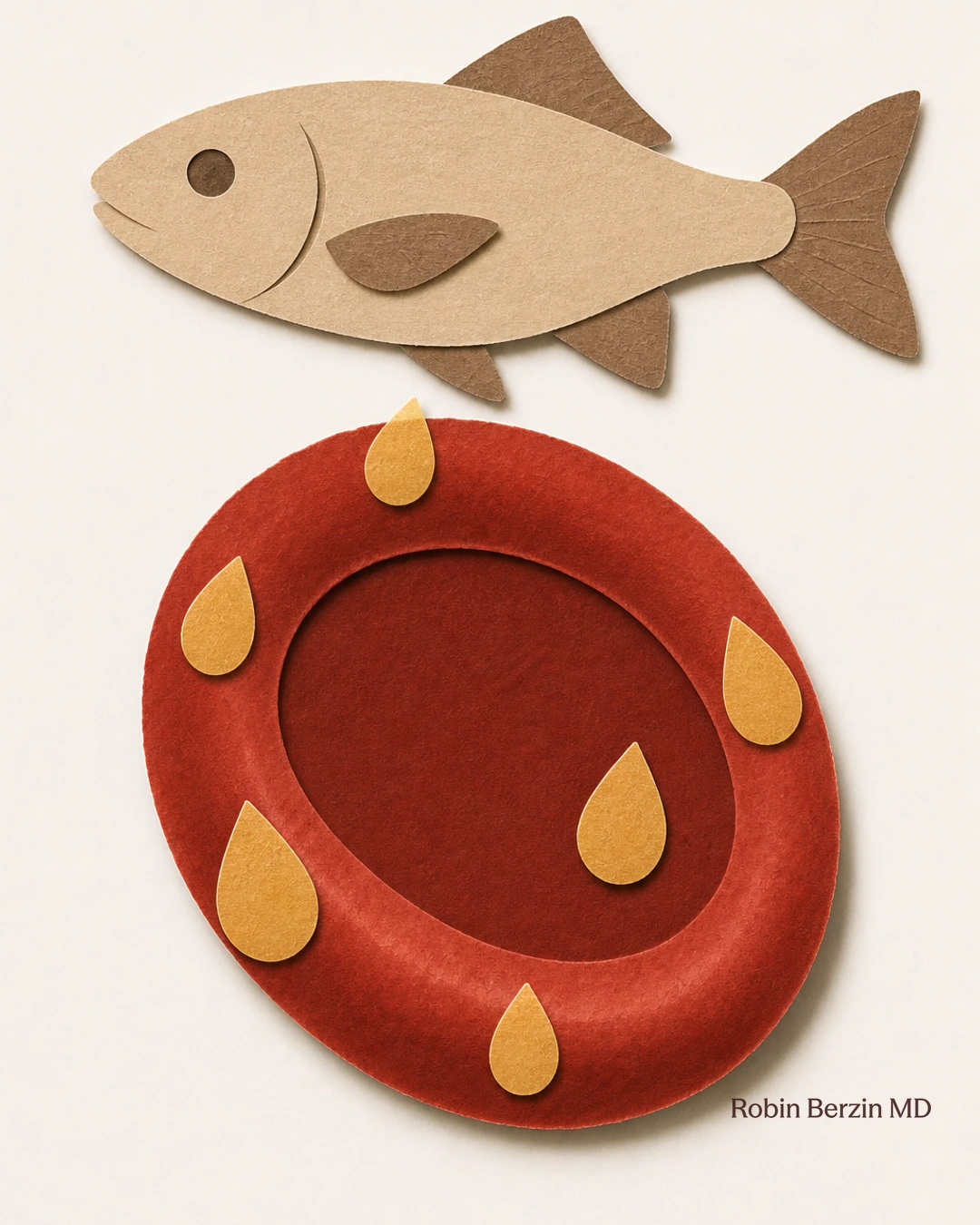
The icing adds real value, too. A high omega-3 index alone was linked to about the same lifespan difference as not smoking.6
The decoration? So far, no human data shows any of it helps you live longer or healthier.
❝ Each foundation pillar is worth years. The decoration: zero, so far.
Why the decoration gets all the marketing.
A plausible mechanism is not a proven outcome. Most of what's sold to us has only reached the first rungs of the evidence ladder: it makes sense, then it worked in mice. Just because it works in a mouse doesn't mean it works in you.