What if the number on your scale is doing more harm than good?
In every longevity conversation I have—whether on stage or in an exam room—someone asks: What’s the one thing I should focus on to live longer?
Robin’s Short Version
Muscle Predicts Mortality: Adults with low skeletal muscle mass face a 57% higher risk of all-cause mortality—a stronger longevity signal than BMI or weight.
Lift With Precision: Training at 60–85% of your one-rep max for 6–12 reps, 2–3 times per week builds muscle; pilates and yoga alone won’t get you there.
Hit the Leucine Threshold: Eating 25–35g of high-quality protein per meal triggers muscle protein synthesis—a signal that gets harder to activate as you age.
My answer is always the same: build muscle mass.
We’ve all been trained to chase a lower number on the scale and to measure our health (and for women, too often our worth) by that number. The truth?
Weight is the wrong metric for healthy aging.
What actually predicts how long (and well) you’ll live is your body composition—especially lean muscle mass. Adults with low skeletal muscle mass have a 57% higher risk of all-cause mortality (PLOS One, 2023).
Here’s what to know about how muscle mass will protect your future self.
What to know: Women with >70% lean muscle mass live longer.
Women lose 3-5% of their total muscle mass per decade starting in their 30s.
Building lean muscle mass now will decelerate your trajectory of aging.
Lean Mass (total & regional) Total muscle and other lean tissue (minus fat and bone).
The most important determinant of metabolic health and longevity.
Women over 65 with low muscle mass are 63 times more likely to die early than their stronger counterparts (Journal of Bone and Mineral Research, 2019).
🌟 Optimal range: 70–75% for women; 80–85% for men
Skeletal Muscle Index (SMI): Total lean muscle mass in your arms and legs ÷ height.
Hit 25–35 g of high-quality protein per meal to reach the leucine trigger point(Frontiers in Nutrition, 2024).
Timing around workouts helps—but total intake matters more
3. Eat carbs for intense lifting
Carb loading doesn’t have much of an impact on performance and recovery unless you’re lifting 10+ sets per muscle (Nutrients, 2022).
Eat 0.5–1 g carbs per lb of body weight before/after training
Pair with protein to replenish glycogen and support repair
Focus on real foods: oats, sweet potatoes, quinoa, rice
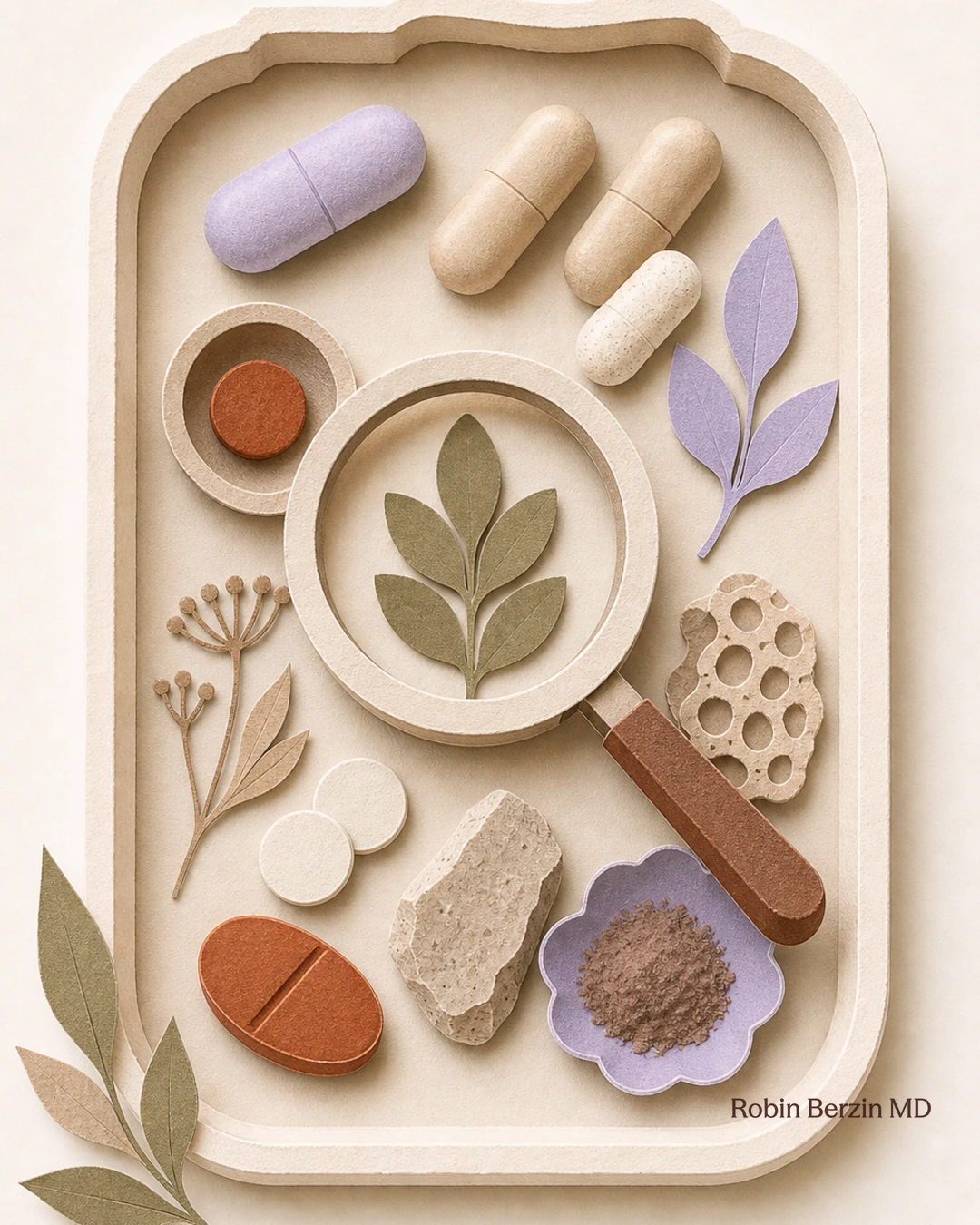
4. Evidence-based supplement support
Creatine monohydrate (3–5 g/day): Boosts strength, lean mass, and may support cognition (Alzheimer’s & Dementia, 2025)
Urolithin A (500–1,000 mg/day): Improves muscle strength and endurance in middle age (Nature Aging, 2022).
Fortetropin® (2.5 g/day): Early evidence on this one, but may boost muscle protein synthesis (PLOS One, 2023)
CTA: RBMD WELCOME
Quick Hits
Longer walks beat shorter ones
A new analysis finds that continuous movement ≥15 minutes lowers heart risk better than racking up the same steps in lots of 5-minutes-or-less spurts—especially if your total step count is under ~8,000 steps/day.
I’m committing to logging at least one 15 minute walk per day with my WHOOP.
Start estrogen earlier
Starting estrogen early—10 years before menopause—may slash the risk of breast cancer, heart attack, and stroke by up to 60%, per new data.
American women are increasingly denied access to intraoperative radiation therapy (IORT)—a single-dose treatment given during breast-cancer surgery that’s standard in many countries. Experts say the real issue is profit.
Forward this to the women you love. 1 in 8 will face a diagnosis.
The Momgevity Files
Happy Halloween! My love-to-love-slash-love-to-hate holiday is officially over.
I love dressing up. This year I was a rose—the international symbol of love and, conveniently, a great excuse to buy one of those beautiful Mexican Day of the Dead flower crowns. I love the joy my kids get from planning and wearing their costumes. And I love the parties and the sense of anticipation.
What I don’t love: the flood of corn syrup, ultra-processed foods, and red dye I’m constantly trying to shield my kids from—like that bird sheltering her chicks from the rain with outstretched wings in that viral Instagram image. I’m mystified by the commercialization and glorification of hoarding and binge-eating sugar. Watching kids trick-or-treating and stuffing bags with more candy than anyone should eat in a year always leaves me feeling a little sad. And I wrestle with the tension between wanting my kids to participate and have fun, and wanting to protect them from foods that harm their bodies.
This year, I let each kid keep their 15 favorite pieces of candy (which, to me, already felt like a lot), and we put the rest from trick-or-treating back in the bowl to give out to others. My oldest—my most stubborn—resisted. He held on to 27 pieces (giving away 39!!) then snuck off and ate half in his room. I tried logic and support instead of consequences and firmness. Neither worked. He crawled into our bed Friday night complaining of a headache and stomach ache. I think the lesson landed, but he’s learned it before and forgotten. He’s only eight. He’s not ready to make this call on his own. (And for those of you suggesting the Switch Witch—trust me, we got a solid year out of that one. The kids are too smart for it now.)
As a parent who cares deeply about health and nutrition—and someone who’s spent the past 15 years working to make America healthier (long before MAHA had any political affiliation—I’m deeply annoyed by where that’s gone, but that’s a conversation for another day) I think a lot about the cultural forces shaping our relationship to food, starting from a very young age. I am not a go-with-the-flow mom. We make all their breakfasts and lunches, cook dinner most nights, teach our kids how to read food labels, and make sure there’s protein and vegetables on every plate. We try not to label foods as “good” or “bad,” because the research shows that moralizing food can increase disordered eating. We love food, and we celebrate it.
So when the “flow” turns into a full-on tsunami of sugar worship, it’s hard not to feel drenched and defeated.
I know my kids will be fine, even though they had a night of candy overload. That’s not what worries me. I have all the tools to rehab their microbiome. What I do worry about are the messages we’re sending our children—the idea that ultra-processed, high-sugar packaged foods aren’t an occasional indulgence, but the background noise of childhood. That’s the real concern.
I trust that my values will take root. But as a longevity mom, I wish our culture made it easier to raise kids in a way that supports healing and thriving, not just coping and indulging.
In the meantime, like all of us, I’m doing my best. That means communicating with clarity and love. Learning year by year. And trying—always—to celebrate collective joy while protecting our personal wellbeing.