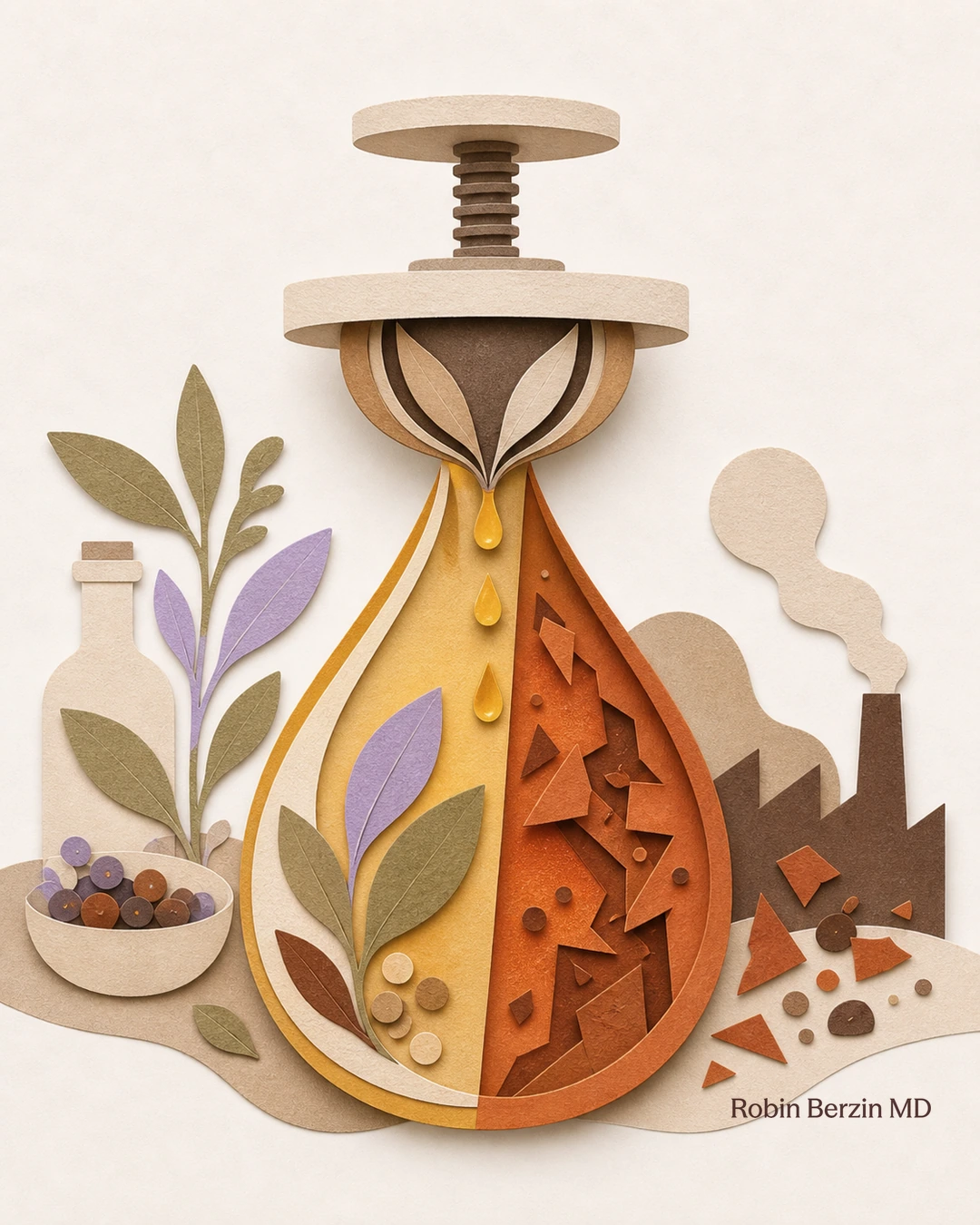
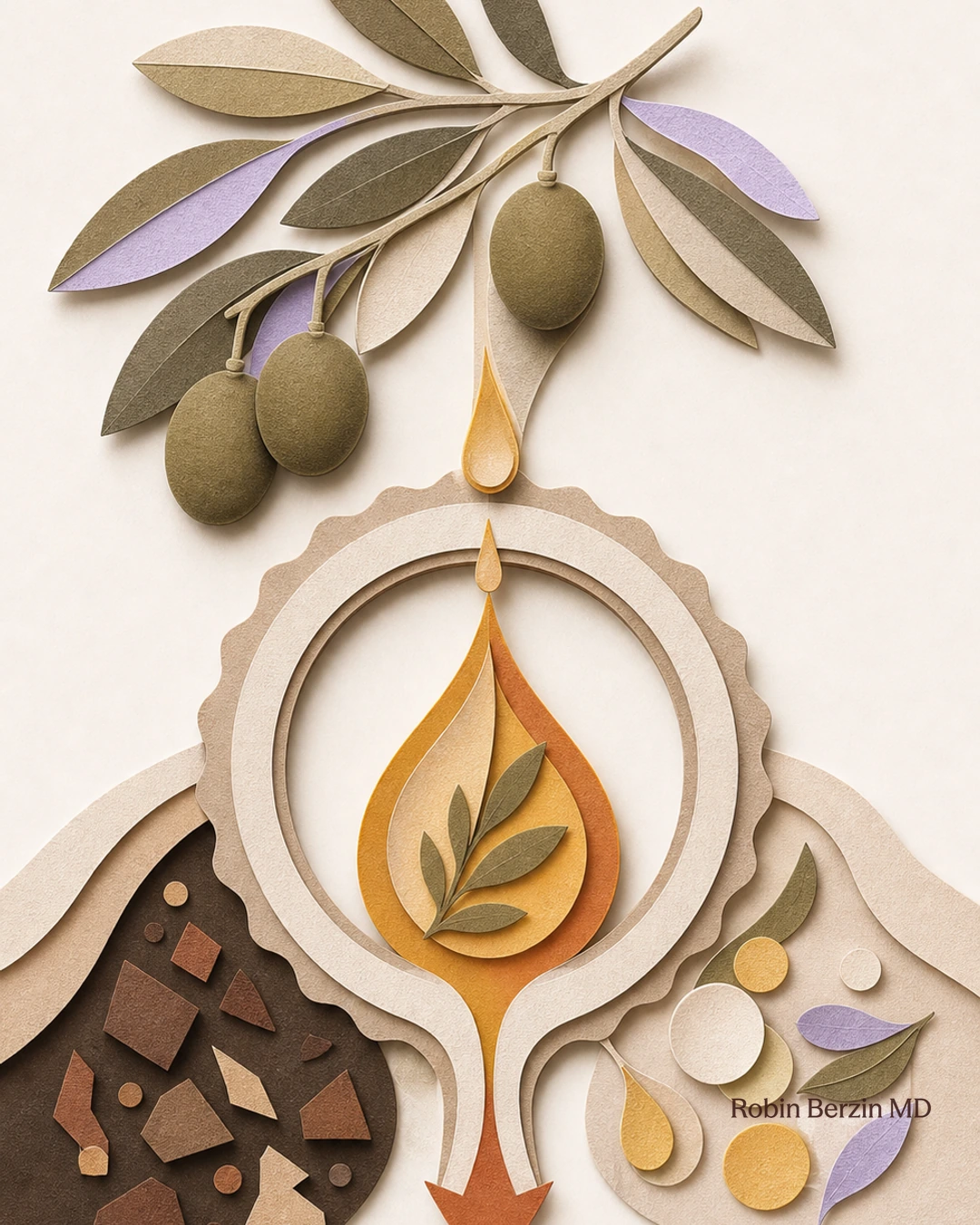
Is your olive oil fake?
Robin’s Short Version
- Widespread Label Fraud: In a 2015 test, 6 of 11 major grocery store EVOO brands failed International Olive Council quality standards.
- Lost Health Benefits: Degraded or diluted olive oil loses oleocanthal and antioxidants responsible for its heart, brain, and cancer-protective effects.
- Daily Supplement Dose: Robin aims for at least one tablespoon of high-quality EVOO daily—drunk straight, blended into smoothies, or added to food.
I’ve been doubling down on my EVOO consumption (that’s extra virgin olive oil for those of you who spend less time grocery shopping than I do!) lately. The brain health and heart health benefits of olive oil are tremendous and well-documented. And more recent research has further convinced me that having at least one tablespoon of high-quality olive oil daily is possibly the most important supplement I’m taking.
But as it turns out, not all EVOO is created equal.
Recently, I posted a story on IG about my love for olive oil, while holding a big tin of Whole Foods 365 brand in my hand. The reaction took me a bit by surprise: this community went nuts calling me out for my low EVOO standards, other EVOO brands sent me reports busting competitors (with requests for anonymity) for their low quality products, and my DMs were flooded with people debating the purity of their favorite popular brands. I now call this episode “Oil Gate.” Apparently you are all very passionate about this topic! As you should be.
Given all the EVOO enthusiasm, I decided to dive into the research and get to the bottom of what makes an olive oil low-quality, which brands are legit, and why this all matters for your health.
The controversy over fake olive oil
Food fraud is a big problem. Misleading or mislabeled foods, foods that mask their true origin, and foods chemically modified, diluted, or cut with cheaper products, are rampant on shelves. Olive oil is among the top three most commonly faked foods (along with milk and honey—who knew?).
Before you panic, this isn’t necessarily cause for alarm. In the case of olive oil, “fake” most often means oil that’s labeled “extra virgin” (meaning high-grade, minimally processed, and super fresh) when it doesn’t actually meet those top tier standards, or olive oil that’s diluted with cheaper vegetable and seed oils to reduce manufacturing costs.
The EVOO controversy peaked in 2015 when the National Consumer League released a report which found more than half of “EVOO” on shelves was mislabeled. In their test of 11 brands of olive oil from major grocery stores including Whole Foods, Trader Joes, Safeway, and Giant, only five proved to be real extra virgin olive oil—the other six failed to meet the quality standards set by the International Olive Council.
Why does this matter?
First of all, EVOO isn’t cheap. If you’re paying for a high-quality product, you want to make sure you’re actually getting a high-quality product that tastes fresh.
But secondly, degraded or diluted olive oil isn’t as healthy. Here’s why: