
When I was diagnosed with osteopenia last year, I went deep on why women lose so much bone in midlife. I knew estrogen was part of it. What surprised me was the other driver: inflammation.
Robin’s Short Version
- Even at a normal BMI, high visceral fat drives the chronic low-grade inflammation that accelerates bone resorption. The scale doesn’t tell you this. Body composition does.
- In a 12-month RCT of 286 postmenopausal women, a specific probiotic-prebiotic combination reduced bone loss at the femoral neck by 85% in women with osteopenia, and 74% at the hip in women with elevated BMI.
- Get a DEXA scan in your early 40s—not at 65 when the standard recommendation kicks in. By then, you’ve missed a decade of intervention.
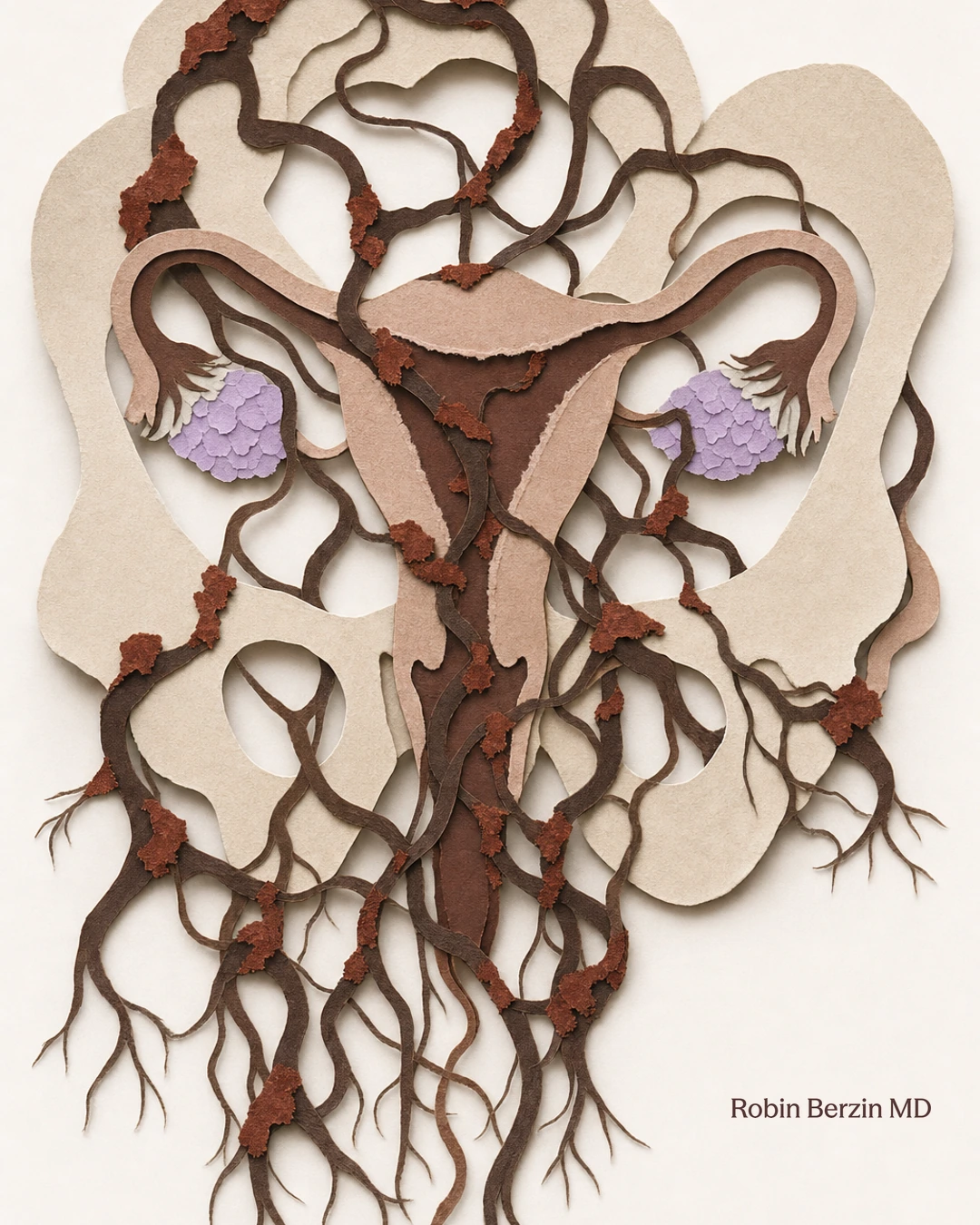
Specifically, the inflammation that comes from visceral fat—the belly fat that wraps around your organs. It’s metabolically active tissue that pumps out inflammatory signals 24/7, even in women who don’t gain weight on the scale. And as estrogen drops in perimenopause, it quietly accumulates in almost all of us. Before menopause, visceral fat makes up about 5–8% of total body fat. After? Up to 15–20%.[1]
That inflammation talks directly to your bones and tips the balance toward breakdown.
The good news: the microbiome is one of the most powerful levers we have to quiet it. This week I’m getting into the belly fat → inflammation → gut → bone loss connection, and how to protect your bones in midlife beyond just lifting weights.
Diagnosed with osteopenia — or wondering if you should be tested? This is exactly the kind of thing I’d want to look at together: your estradiol, hsCRP, and body composition, not just your calcium intake. Let’s figure out what’s driving it →
What to know: Bones are an immune organ.
❌ The old framework: bone loss = estrogen decline + calcium deficiency.
Both matter. But chronic inflammation is the missing variable. When the immune system is persistently activated, inflammatory cytokines (TNF-α, IL-6) stimulate osteoclasts—the cells that dissolve bone—and suppress osteoblasts, the cells that build it.
✅ Visceral fat is an inflammation engine.
Unlike subcutaneous fat, visceral fat actively secretes TNF-α and IL-6 into circulation. Even at a normal BMI, high visceral fat drives the chronic low-grade inflammation that accelerates bone resorption.[2] The scale doesn’t tell you this. Body composition does.
Even at a normal BMI, high visceral fat drives the chronic low-grade inflammation that accelerates bone resorption. The scale doesn’t tell you this. Body composition does.
✅ Estrogen loss makes it worse—through the gut.
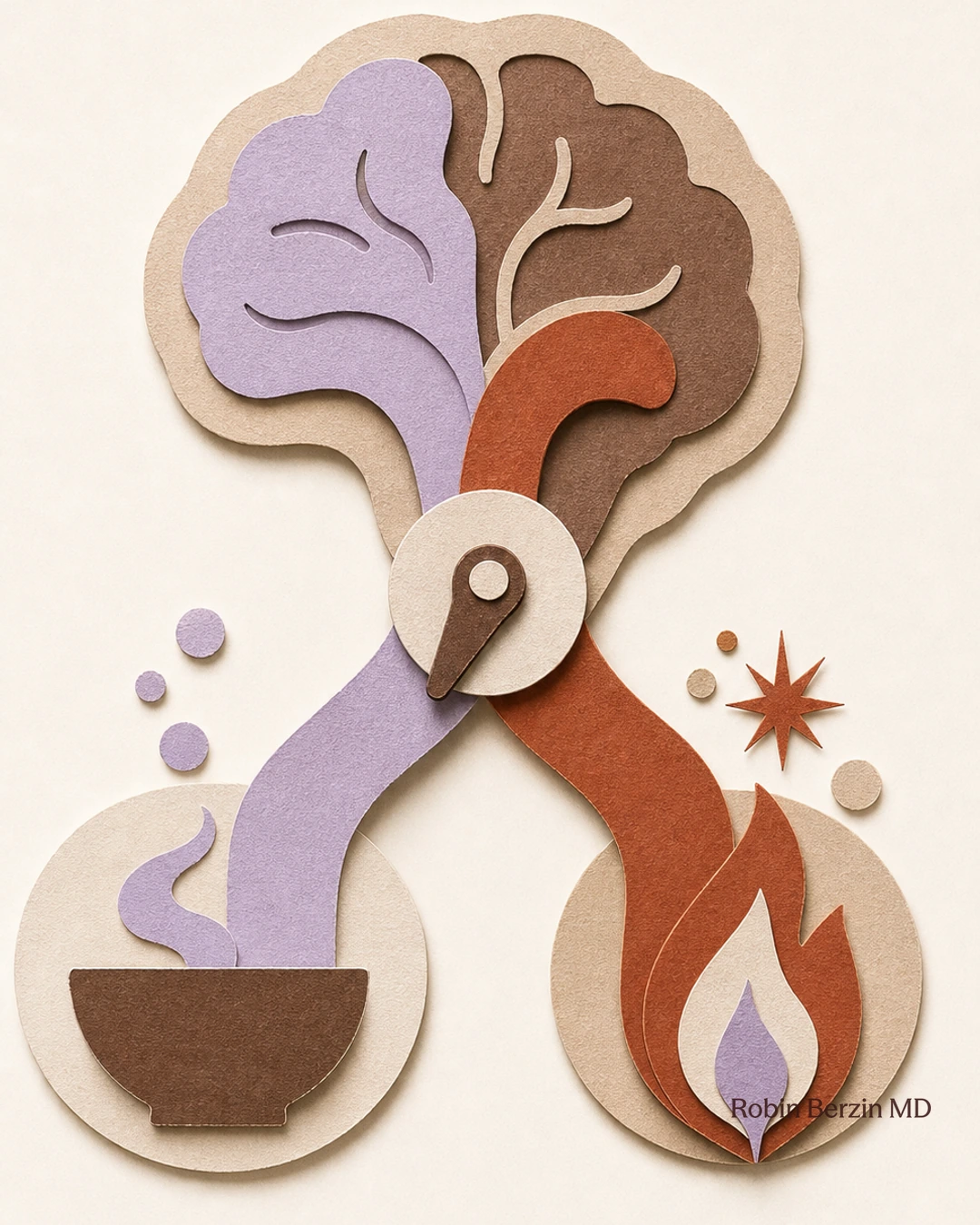
Estrogen helps maintain gut barrier integrity. As it drops in perimenopause, the gut becomes more permeable—letting bacterial fragments into circulation and amplifying systemic inflammation. Less estrogen → leakier gut → more inflammation → faster bone loss.[3]
✅ The right gut bacteria can slow the process.
Certain strains of bacteria—particularly those that produce SCFAs and support tight-junction proteins in the gut wall—have been shown to reduce systemic inflammation markers and directly inhibit osteoclast activity.
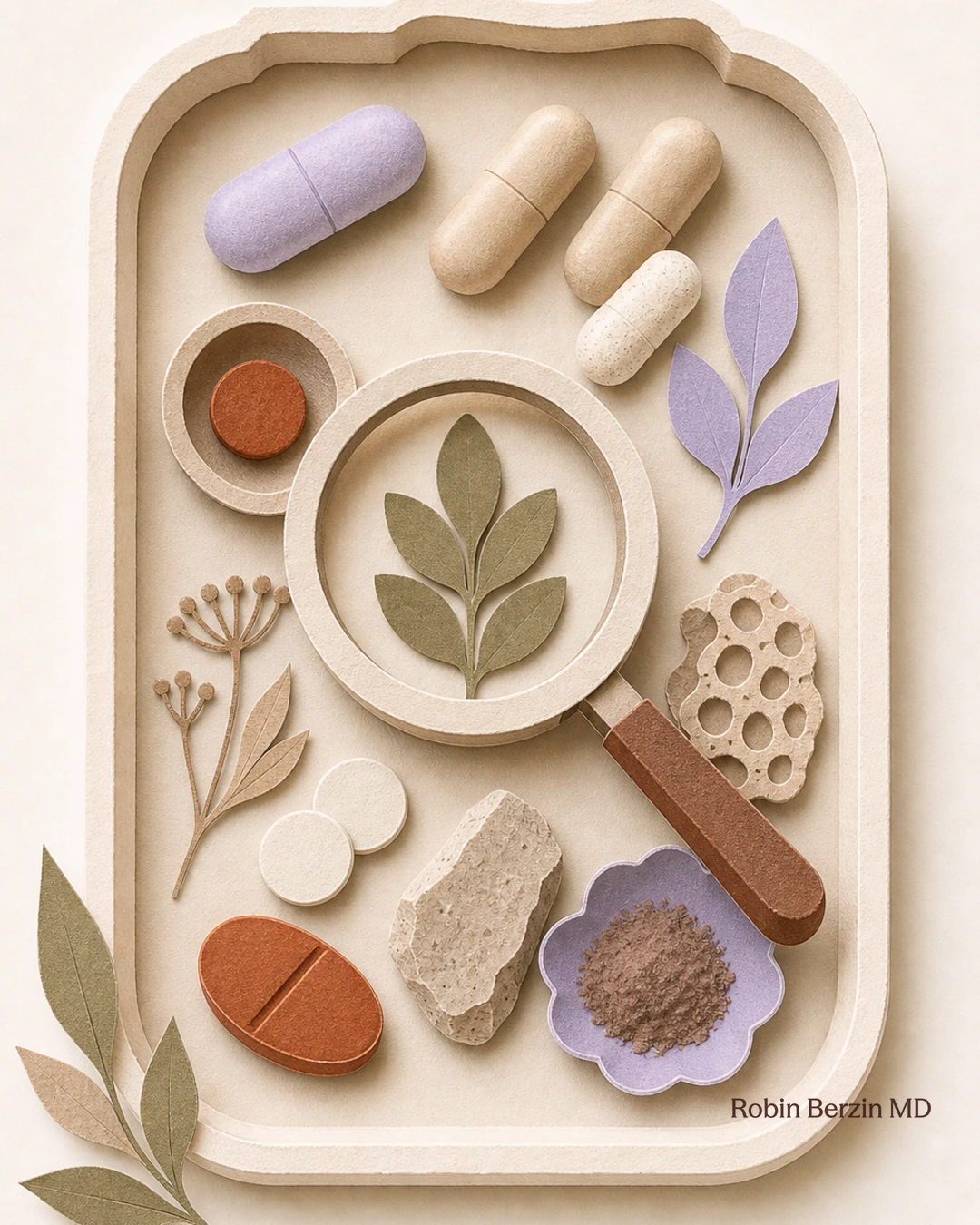
In a 12-month RCT of 286 postmenopausal women, a specific probiotic-prebiotic combination reduced bone loss at the femoral neck by 85% in women with osteopenia, and 74% at the hip in women with elevated BMI—on top of vitamin D supplementation in both groups.[4] The formulation used in that trial is Bondia.
In a 12-month RCT of 286 postmenopausal women, a specific probiotic-prebiotic combination reduced bone loss at the femoral neck by 85% in women with osteopenia, and 74% at the hip in women with elevated BMI.
What to do: Build your bone + gut protocol.
Step 1: Reduce visceral fat—the less of it you have, the less inflamed you are.
- Zone 2 cardio 3–4x/week (30–45 min, conversational pace)
- Strength train 2–3x/week
- Cut added sugars
- Aim for 80g+ protein/day
Step 2: Feed a healthy gut
- Eat 30+ different plant foods (fruits and veg) per week—variety over volume
- Add seeds, include legumes, prioritize whole grains over refined flours
- Limit alcohol and ibuprofen—both directly damage the gut barrier
Step 3: Consider a synbiotic if you have osteopenia or elevated BMI
Not all probiotic strains do the same thing. Look for formulations with clinical data specifically on bone and inflammation endpoints—not just general gut health claims.
⭐ If you do one thing: Get a DEXA scan in your early 40s—not at 65 when the standard recommendation kicks in. By then, you’ve missed a decade of intervention.
The Momgevity Files
This weekend I went to a very unconventional wedding in New Orleans. Friends of mine are deeply embedded in the art and culture scene there, and hosted a three-day celebration of their love for each other—and their city—with their community.
The theme was Becoming Together. Elaborately costumed for each event, we floated from art galleries to garden parties to a showcase of performances by their incredibly talented friends. A literal dream.
I went by myself. (Taking three kids on a trip like this is a non-starter, logistically and energetically—and my husband has a ski trip next week, so we traded off. I’m on duty next weekend!) In my early 40s, I find these solo moments rare and precious. Dressing up, dancing through the streets in a second line behind a brass band, eating breakfast pho at a bodega at the edge of town—I can do all of this with family, but with a lot more planning and a lot less spontaneity. A weekend like this was fuel for my heart.
As I write this, I’m also exhausted. The late nights and hyper-socializing will require recovery. One of my kids is sick and I moved my flight up to make it home by bedtime. This week I’m taking it easy energetically—weights and Pilates yes, early bedtimes, home-cooked meals, and a few days before I get back to cardio.
Worth every minute of it.
I give myself a lot of permission at this stage of life. My mantra is stopping the clock without stopping my life. I see this moment as one of peak expansion—I want to experience as much as I can while being as present as possible for the experiences I’m having.
A big theme of the weekend, naturally, was love. One of the artists shared a list of definitions that stayed with me. Love is kindness. Love is presence. Love is listening with warm eyes. Love is curiosity. Love is community. Love is creativity. Love is expression. Love is giving. Love is devotion. Love is letting go. Love is allowing yourself to become.
It was a reminder that when it comes to longevity, we’re playing the long game—and we have permission right now to become the next version of ourselves, if we love ourselves enough to allow it.
Does this match how you’re approaching recovery after a big weekend — or do you push straight through? Hit reply.
One more thing…
My annual longevity labs with Parsley are one of the things I actually look forward to—because seeing your numbers motivates you to act on them.
Book yours here or BYO labs and book a consult with a Parsley clinician for advanced analysis and a personalized plan.
And if you’re interested in trying Bondia — use code BERZIN for 20% off.
If you have osteopenia — or suspect you do — come talk to us. At Parsley we’d run your estradiol, hsCRP, and a DEXA-informed body composition panel together, and build a bone-protection protocol that addresses the inflammation piece, not just calcium and vitamin D. Talk to a Parsley provider →
Stay strong, stay curious, and breathe,
Robin
Frequently Asked Questions
What causes bone loss in women besides estrogen decline?
Beyond estrogen, chronic inflammation is the missing variable most women aren’t thinking about. Visceral fat—the belly fat that wraps around your organs—actively secretes inflammatory cytokines like TNF-α and IL-6 that stimulate osteoclasts (the cells that dissolve bone) and suppress osteoblasts (the cells that build it). This can happen even at a normal BMI, which is why body composition tells you more than the scale.
How does gut health affect bone density?
As estrogen drops in perimenopause, the gut becomes more permeable—letting bacterial fragments into circulation and amplifying systemic inflammation, which in turn accelerates bone loss. The good news is that certain strains of gut bacteria that produce short-chain fatty acids have been shown to reduce systemic inflammation markers and directly inhibit osteoclast activity.
Can probiotics actually reduce bone loss?
Yes, there is clinical evidence for specific formulations. In a 12-month RCT of 286 postmenopausal women, a specific probiotic-prebiotic combination (synbiotic) reduced bone loss at the femoral neck by 85% in women with osteopenia, and 74% at the hip in women with elevated BMI—on top of vitamin D supplementation. The key is using formulations with clinical data specifically on bone and inflammation endpoints, not just general gut health claims.
When should women get a DEXA scan for bone density?
I recommend getting a DEXA scan in your early 40s—not at 65 when the standard recommendation kicks in. By 65, you’ve missed a decade of intervention. If you already have osteopenia, I’d want to look at your estradiol, hsCRP, and body composition together, not just your calcium intake.
Scientific References
- Current Atherosclerosis Reports, 2022 — Visceral fat rises from 5–8% to 15–20% after menopause
- Obesity, 2016 — Visceral fat drives low-grade inflammation accelerating bone resorption
- Frontiers in Endocrinology, 2024 — Estrogen loss increases gut permeability and systemic inflammation
- Osteoporosis International, 2025 — Probiotic-prebiotic reduced femoral neck bone loss 85% in osteopenia RCT